
Methods for treating hair loss in men and increasing hair density
Discover treatments for male hair loss and ways to increase hair density using reliable, medically-backed, and practical methods. Learn about the causes of baldness, diagnostic procedures, and the best treatment options available at New Skin clinics.
02.11.2026
Every man who notices extra strands in the shower drain or a widening part in the mirror knows that quiet, creeping anxiety all too well. Hair loss treatment for men and thickening has become one of the most searched health topics globally and for good reason, because effective options genuinely exist when you know where to look. The problem is that misinformation floods the internet, and most men waste months on products that were never going to work for their specific type of loss.
Understanding your options starts with understanding your situation. At the Hair and Skin Care Center at New Skin Clinics, specialists approach every case individually — because what reverses diffuse shedding in a 28-year-old rarely produces the same results in someone dealing with advanced genetic recession at 45. The gap between generic advice and personalized clinical guidance is enormous.
Causes of Hair Loss in Men
- Male pattern baldness (androgenetic alopecia): The most common cause, often influenced by genetics and sensitivity to the hormone DHT.
- Genetic factors: A family history of hair loss can increase the likelihood of developing male pattern baldness.
- Hormonal changes: Changes in hormone levels or certain hormonal disorders can contribute to hair loss.
- Nutritional deficiencies: Deficiencies in nutrients such as iron, zinc, vitamin D, or protein may affect hair growth.
- Stress and psychological pressure: Significant or prolonged stress can trigger temporary increased hair shedding.
- Diseases and medical conditions: Some autoimmune diseases, thyroid disorders, and other health conditions can cause hair loss.
- Scalp problems: Conditions such as dandruff, inflammation, fungal infections, or other scalp disorders may affect hair growth.
- Certain medications: Some medications can cause hair shedding as a side effect.
- Hair treatments and physical damage: Excessive heat, harsh chemical treatments, or repeated tension on the hair can weaken the hair shaft and contribute to breakage or loss.
Types of Hair Loss in Men
Not all hair loss is the same. Distinguishing between the different types is not merely an academic detail; rather, it is the first step toward the correct treatment. The types of hair loss in men are as follows:
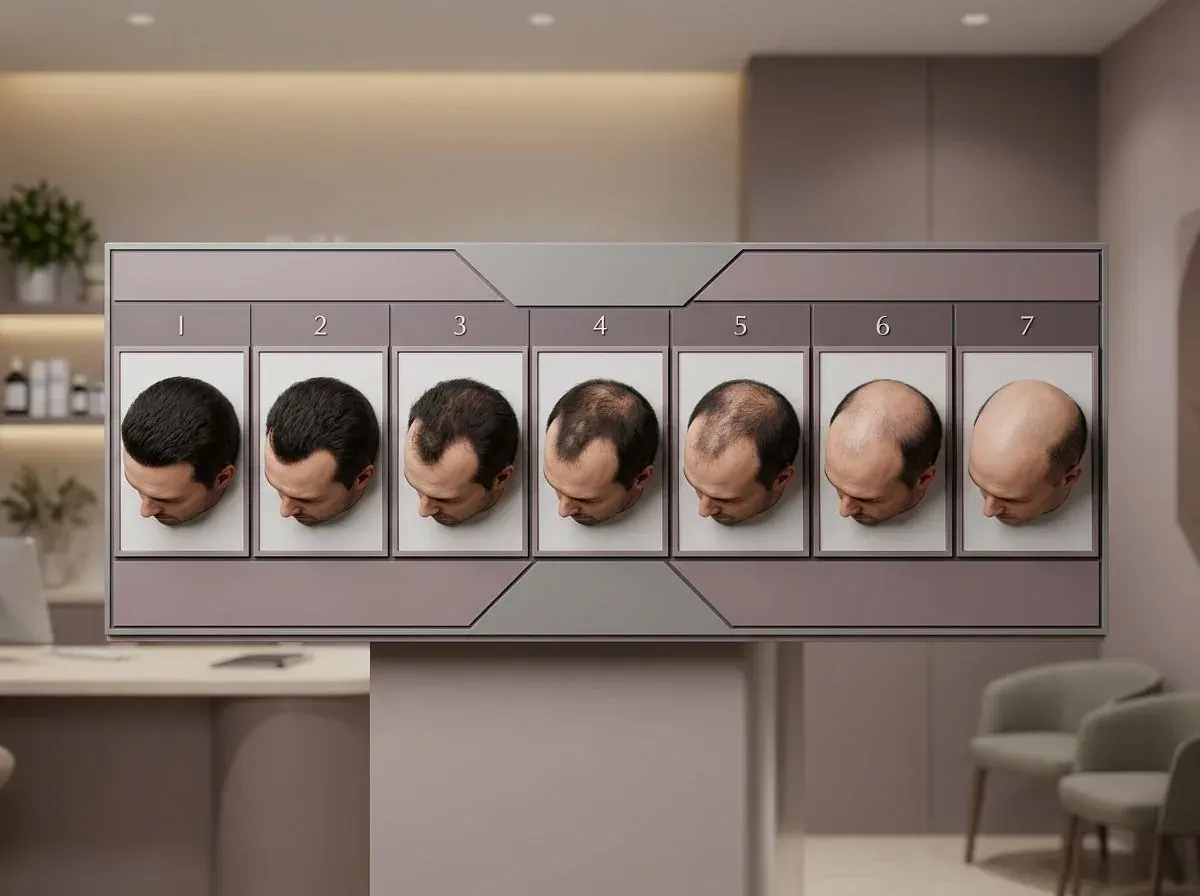
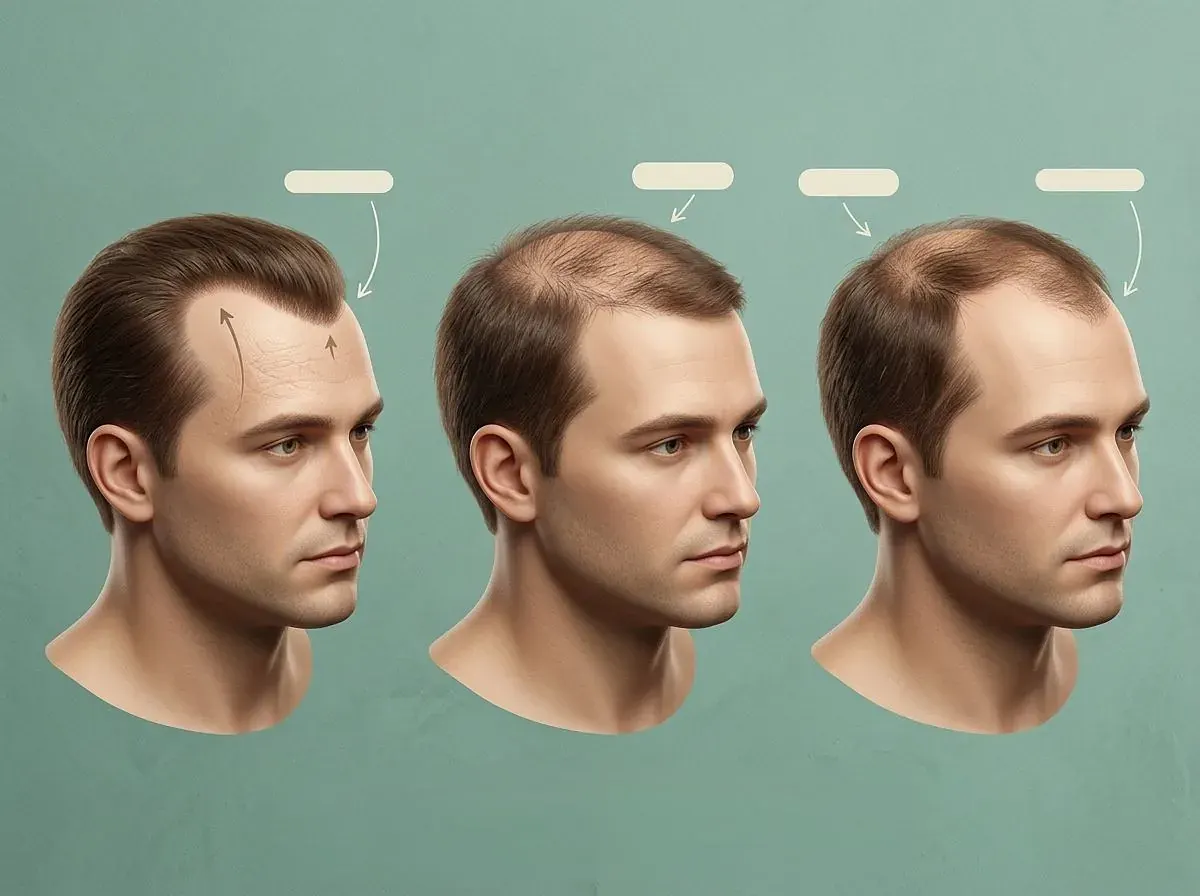
- Androgenetic alopecia is the most common type and affects about 70% of men at various stages of their lives. It usually begins with a receding hairline at the forehead, followed by thinning in the crown area; the two areas may later merge in a pattern medically known as the Hamilton-Norwood scale.
- Alopecia areata is a completely different condition; it is an autoimmune disease in which the body attacks its own hair follicles without any apparent organic cause. It appears as circular, hairless patches distributed across different areas of the scalp. In fact, this type requires a treatment approach that is radically different from that for hereditary baldness.
- Telogen effluvium is temporary in most cases and occurs after physical or psychological trauma, a severe illness, or prolonged malnutrition. This condition resolves spontaneously once the underlying cause is addressed, though this may take several months. Distinguishing between this condition and hereditary hair loss requires a specialized evaluation.
Learn about: How men can get rid of facial wrinkles, and what causes them
How to Diagnose the Cause of Hair Loss
An accurate diagnosis is the difference between an effective treatment and one that wastes time and effort. No one can determine the type of hair loss they have simply by looking in the mirror or reading an article online; this is not meant to question the reader’s intelligence, but rather to acknowledge that the matter requires diagnostic tools that are not available at home.
A correct diagnosis begins with a complete medical history:
When did the hair loss begin?
- Was it gradual or sudden?
- Is there a family history of baldness?
- What medications is the person taking?
- What has been the level of stress over the past few months? These questions alone provide the doctor with significant guidance.
Next come blood tests to measure levels of iron, hemoglobin, vitamins, and hormones particularly thyroid hormones and DHT. At New Skin clinics, we use a scalp imaging device (trichoscopy) that allows for high-resolution visualization of the hair follicles and determines their level of activity and degree of atrophy. This step, in particular, greatly influences treatment decisions and helps avoid choosing an inappropriate treatment.
Hair Loss Treatment for Men
Once a diagnosis is clear, the real work begins. Effective hair loss treatment for men and thickening depends heavily on the type and stage of loss, the patient's age, health history, and personal goals. There is no single universal solution — but the good news is that modern dermatology now offers a wider and more effective toolkit than ever before.
Baldness Stages and Their Effect on Treatment Choice
The degree of baldness varies from person to person, so there is no one-size-fits-all treatment. Determining the stage of baldness and the pattern of hair loss helps the doctor choose the most appropriate treatment, whether the goal is to slow hair loss and preserve existing hair or to restore density in areas where hair has been lost.
You can also find out: The best skin-cleansing clinic for men
Early Stage
Receding typically begins at the front hairline or temples, with slight thinning of hair density. At this stage, the focus may be on preserving existing hair and slowing the progression of hair loss, and non-surgical options are often more appropriate.
Intermediate Stage
Receding hairlines or thinning at the crown become more noticeable, and bald patches may gradually expand. At this stage, the doctor needs to assess the stability of hair loss and the density of the remaining hair, then determine whether medication, non-surgical procedures, or hair transplantation is most appropriate.
Advanced Stage
Hair loss is more widespread, and the bald areas at the front of the head and the crown may connect. At this stage, a hair transplant may become an option to restore hair in areas that have lost density, but its success depends on important factors such as the availability of a good donor area and the stability of the hair loss.
Severe Stage
Baldness is extensive, with significant hair loss in the front of the head and the crown area. This does not automatically mean that a transplant is appropriate; rather, the doctor needs to evaluate the donor area and the patient’s expectations to determine what can realistically be achieved.
Best Method for Treating Genetic Baldness in Men
For androgenetic alopecia specifically, the most evidence-backed medical treatments are minoxidil and finasteride — both approved by international regulatory authorities for male pattern hair loss. Minoxidil works by prolonging the active growth phase of the hair cycle and improving blood flow to follicles. Finasteride works by blocking the conversion of testosterone to DHT, directly addressing the hormonal driver of genetic baldness. Used together, their combined effect is significantly stronger than either alone.
PRP therapy has gained strong clinical support over the past decade as an adjunct treatment. A patient's own blood is drawn, the platelet-rich fraction is separated through centrifugation, and the concentrated growth factors are injected into the scalp. This process stimulates dormant follicles and accelerates the response to other treatments. For men who have reached the stage where surgery is appropriate, follicular unit extraction (FUE) hair transplantation offers permanent, natural-looking results by relocating genetically resistant follicles from the donor zone to areas of loss.
Learn how to choose the best skincare clinic and evaluate its services
Hair Loss Treatment and Thickening at the Clinic
In recent years, clinical treatments have gone beyond simply prescribing medications. Treatments for male hair loss and hair thickening now include comprehensive protocols that combine multiple approaches simultaneously to achieve the best possible results.
- Hair mesotherapy is a technique that involves injecting a mixture of vitamins, minerals, and hyaluronic acid directly into the scalp, which nourishes the follicles from within and improves their environment. Low-level laser therapy (LLLT) is another option that stimulates follicular cells at the cellular level without heat or pain.
- FUE hair transplantation is the definitive solution when hair follicles in the affected areas have stopped growing permanently; it involves transferring follicles from donor areas at the back of the head and implanting them in the balding areas.
When Do Hair Loss Treatment Results Appear?
Follicle-stimulating treatments such as minoxidil and PRP typically take between three and six months to show noticeable results, with the full effect peaking between the ninth and twelfth months. Hair transplants follow a different timeline; the transplanted hairs fall out a few weeks after the procedure, which is completely normal, then begin to grow back after three months, and the final result usually becomes apparent after a full year.
Methods for Thickening Hair in Men
Thickening existing hair while simultaneously addressing loss is a dual goal that many men pursue and it is entirely achievable with the right approach. Clinical treatments like PRP and mesotherapy directly increase hair shaft diameter over successive sessions, producing visibly fuller-looking hair even before significant regrowth occurs. Scalp massage, performed consistently for at least four minutes daily, has been shown in clinical studies to increase hair thickness by stretching follicle cells and stimulating growth signals.
Shampoos and conditioners containing caffeine, ketoconazole, or saw palmetto can complement clinical treatment by reducing scalp DHT levels and improving follicle environment though they should never be mistaken for standalone solutions. The real thickening results come from the combination of clinical intervention and daily maintenance habits working together over months.
Nutrition and Its Role in Thickening Men's Hair
What men eat genuinely shows in their hair. Protein is the structural foundation of every hair strand keratin, the protein that makes up hair, cannot be produced in adequate quantity when dietary protein is insufficient. Men experiencing hair thinning should prioritize high-quality protein sources like eggs, fish, lean poultry, and legumes at every meal.
Iron deficiency is particularly sneaky because it often exists at levels that appear normal on standard blood panels but still impair follicle function. Getting iron levels checked through a ferritin test which measures stored iron rather than circulating iron — gives a more accurate picture. Zinc supports the enzymes involved in hair tissue growth and repair, while omega-3 fatty acids reduce scalp inflammation that can suppress follicle activity. A nutrition consultation at the Hair and Skin Care Center at New Skin Clinics can identify specific deficiencies contributing to a patient's thinning and help design a targeted dietary correction plan.
Mistakes That Worsen Hair Loss in Men
Mistakes That Exacerbate Hair Loss in Men
Did you know that some seemingly innocent daily habits can significantly accelerate hair loss? The most common mistake is delaying seeking help. The longer a man waits to address hair loss, the more his hair follicles atrophy and the fewer treatment options he has available.
- Washing hair with very hot water loosens the follicles and weakens their hold.
- Drying hair by rubbing it vigorously with a towel causes weak hairs to break and irritates the scalp.
- Overreliance on chemical styling products such as strong gel and wax clogs the pores of the scalp and reduces the ventilation necessary for the hair follicles.
- Intermittent sleep and chronic stress raise cortisol levels, which shorten the hair growth cycle. Smoking reduces blood flow to the scalp—a cause that is rarely mentioned but is scientifically documented. Finally, relying on folk remedies and unapproved products wastes valuable time that could have been spent on effective treatment.
Frequently asked
Is Hair Loss Treatment for Men and Thickening Suitable for All Ages? +
Hair loss treatment for men and thickening can be appropriate across a wide range of ages, but the specific approach should be tailored to the patient's age, hormonal profile, and the stability of their hair loss pattern. Very young men — late teens and early twenties — are sometimes advised to wait before committing to surgical options because their pattern of loss may not yet be fully established, making it difficult to plan a transplant with confidence about future progression. Medical treatments like minoxidil and PRP, however, are appropriate earlier in life and can be genuinely effective at slowing or halting loss during this critical window.
How Many Sessions Are Needed at a Hair and Skin Care Center? +
The number of sessions depends entirely on the treatment type and the individual's response. PRP therapy typically follows an initial protocol of four to six sessions spaced three to four weeks apart, followed by maintenance sessions every three to six months. Mesotherapy follows a similar structure. At the Hair and Skin Care Center at New Skin Clinics, specialists reassess each patient's progress after every few sessions and adjust the protocol based on observable response — because no two scalps respond identically to the same treatment frequency.
Can Genetic Baldness Be Completely Reversed with Treatment? +
This is a question worth answering honestly rather than optimistically. Genetic baldness cannot be fully reversed in areas where follicles have permanently ceased function — no current treatment regrows hair from completely dead follicles. However, in areas where follicles are miniaturized but still alive, consistent medical treatment can significantly reverse thinning and restore meaningful density. Hair transplant surgery can achieve dramatic, permanent results by relocating genetically resistant follicles. The earlier treatment begins, the more of the original hairline and density can be preserved or recovered.