
Causes of Facial Flaking and Dryness, and How to Treat Them
Learn about the causes of facial peeling and dryness in detail, and how they vary according to skin type. Discover the most effective, reliable treatment routine offered by the Hair and Skin Care Center at New Skin Clinics.
03.11.2026
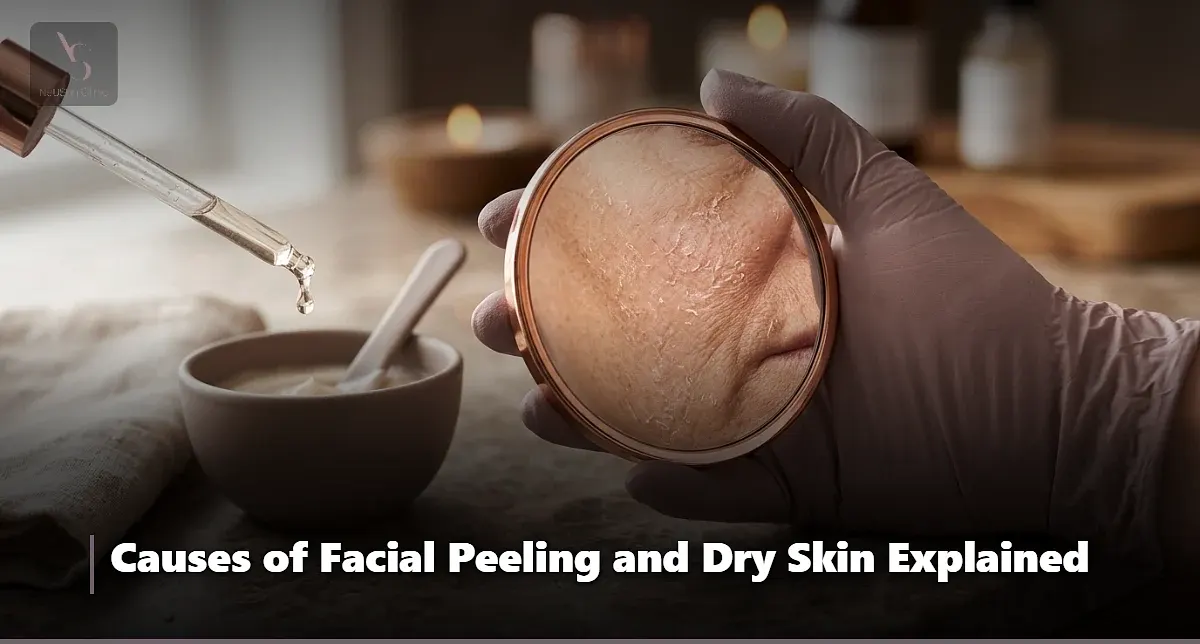
Most people notice it gradually — a patch of tightness here, a few flakes near the nose there — until one morning the mirror tells a different story entirely. Understanding the causes of facial peeling and dry skin is the first and most important step toward actually fixing the problem, not just masking it with a thick moisturizer that buys you a few hours of relief.
At New Skin Clinics, the hair and skin care center team sees patients with this concern every single week, and the pattern is almost always the same: people treat the symptom rather than the source. That approach rarely works long-term. What follows is a thorough breakdown of what is really happening beneath the surface of your skin and what you can genuinely do about it.
What Are the Causes of Facial Peeling and Dry Skin?
Skin peeling from the face is never random. It signals that something has disrupted the skin's natural ability to retain moisture and shed dead cells in a controlled, invisible way.
The outer layer of skin the stratum corneum acts as a physical barrier, and when that barrier breaks down, water evaporates too quickly, cells clump irregularly, and visible flaking begins. The causes of facial peeling and dry skin range from environmental factors to deeply personal habits, and most cases involve more than one trigger working together.
Genetics plays a quiet but powerful role here. Some people simply produce less sebum — the skin's natural oil which means their barrier is thinner and more vulnerable from the start. Cold, dry air strips what little moisture the skin manages to hold, and central heating makes the indoor environment just as hostile as the outdoors in winter. Sun exposure accelerates moisture loss dramatically, even on cloudy days, which is why dermatologists at the New Skin Clinics hair and skin care center consistently stress year-round sun protection as a non-negotiable baseline.
Sudden Facial Peeling: What Triggers It
Severe skin dryness, especially in cold weather or due to lack of hydration.
Sunburn;
- peeling may appear some time after sun exposure.
- Use of harsh products on the skin, such as retinol, exfoliating acids, or benzoyl peroxide.
- Excessive face washing or use of harsh cleansers.
- Contact dermatitis resulting from an allergic reaction or irritation caused by a new product.
- Eczema, which may be accompanied by itching, redness, and dryness.
- Seborrheic dermatitis, especially if the flaking is accompanied by redness and scales around the nose and eyebrows.
- Psoriasis, which may appear on the face in some cases.
- Certain skin infections that cause changes in skin texture and flaking.
- Chemical peels or certain dermatological procedures, where flaking is an expected part of the recovery process.
Learn: how to get rid of acne marks on your face
Factors That Make Facial Dryness and Peeling Worse
Factors That Exacerbate Facial Dryness and Flaking
There are factors that do not cause flaking on their own but exacerbate it and prolong its duration:
- Bathing in very hot water and washing the face too frequently weaken the skin’s natural ability to moisturize itself.
- A diet lacking in healthy fats, such as omega-3s, and fat-soluble vitamins, such as vitamins A and E, exacerbates internal dryness because the skin primarily builds its cells from these elements.
- Wind and UV rays both gradually strip moisture from the skin, slowly damaging the skin barrier until flaking occurs. Insufficient water intake also contributes to this, although it is not enough on its own to treat skin dehydration, since the hydration process depends on external factors just as much as it does on internal hydration.
The Difference Between Facial Dryness and Skin Peeling
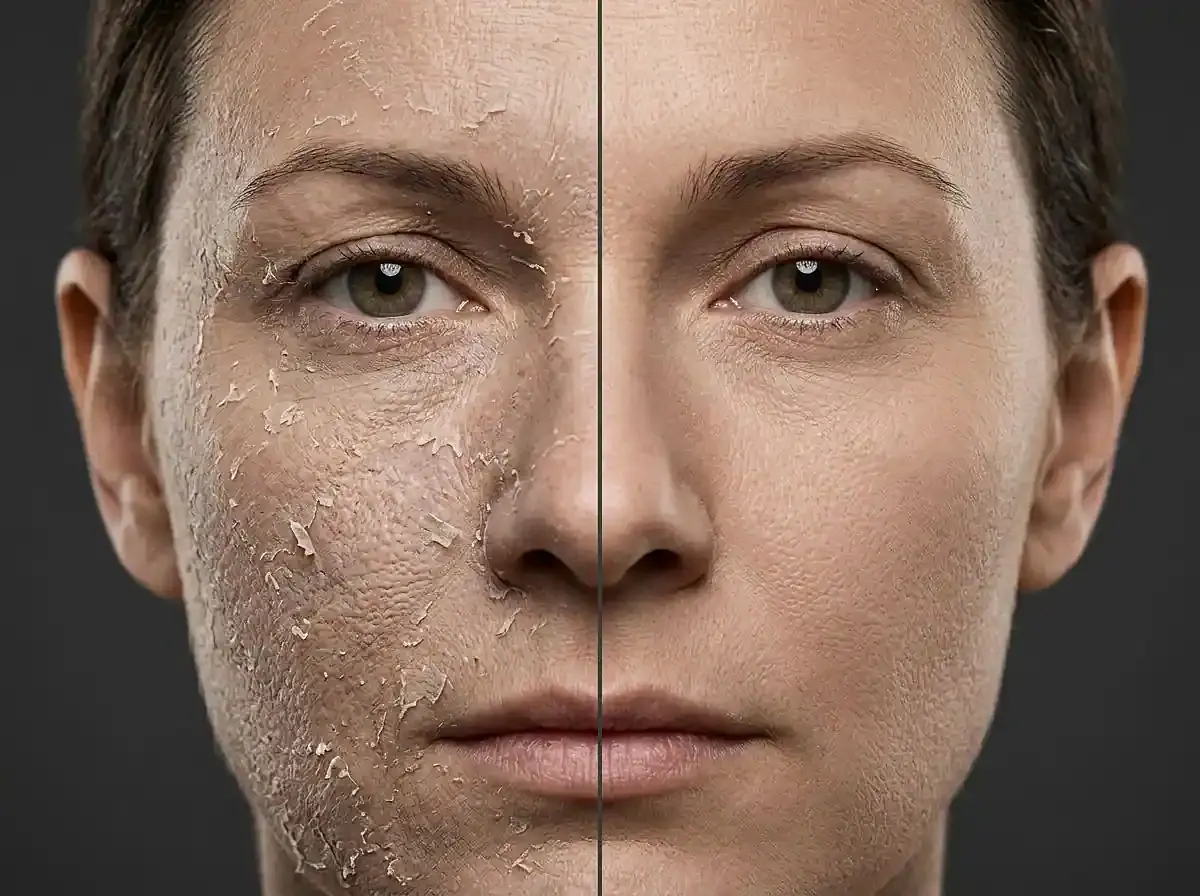
Many people use the two terms interchangeably, but the difference between them is fundamental and important for determining the correct treatment, since:
- Facial dryness is a condition that refers to a lack of water content within the skin layers, and it can affect any skin type, including oily skin
- Flaking, on the other hand, is a surface-level symptom—the shedding of accumulated dead skin cells that appear as fine or coarse flakes.
Distinguishing between the two conditions sometimes requires a professional evaluation, which is exactly what the New Skin Clinics team provides through a thorough analysis of the skin’s condition before recommending any treatment plan.
Learn about: Ways to stimulate collagen in the skin
Causes of Facial Peeling and Dry Skin by Skin Type
Causes of Facial Flaking and Dryness by Skin Type
- When normal skin becomes dry, the signs are clearly visible because the skin’s natural balance does not compensate for the deficiency by overproducing oil
- Oily skin, on the other hand, may suffer from underlying dryness even while appearing shiny—a condition known as “masked dryness”—as the sebaceous glands attempt to compensate for moisture loss by producing more oil.
- Combination skin experiences flaking in dry areas such as the cheeks and jawline, while the T-zone remains oily. This imbalance makes product selection a delicate matter, as what works for one area may harm another.
- Sensitive skin is most prone to sudden flaking in response to any change in routine or environmental factors, and requires the utmost caution when selecting skincare products.
How to Treat Facial Dryness and Peeling
Treatment has to match the cause. If the trigger is a new product, stopping it immediately and returning to a stripped-back routine of gentle cleanser, fragrance-free moisturizer, and SPF usually resolves mild cases within one to two weeks. If the trigger is environmental, protective measures like humidifiers, barrier-repairing creams with ceramides, and reducing shower temperature make a measurable difference faster than any active ingredient could.
For persistent or severe cases, the specialists at New Skin Clinics hair and skin care center can identify whether an underlying condition like eczema, psoriasis, or seborrheic dermatitis is contributing to the problem. These conditions require targeted medical treatment rather than over-the-counter skincare alone, and attempting to self-treat them with strong actives often prolongs the damage.
The Best Ingredients for Treating Facial Dryness and Peeling
- Hyaluronic acid is the most well-known ingredient for treating dry skin; it attracts moisture from the surrounding environment and locks it into the upper layers of the skin. However, its use must be followed by a heavier moisturizer that prevents moisture from evaporating; otherwise, it becomes a problem in dry environments rather than a solution.
- Ceramides are ingredients that rebuild the skin barrier from within and enhance its ability to retain moisture over the long term.
- Shea butter and plant-based oils, such as jojoba oil and argan oil, soften the skin’s surface and reduce dryness thanks to their rich fatty acid content.
- Vitamin B5, or panthenol, is both a soothing and moisturizing ingredient, making it the ideal choice for sensitive or irritated skin.
A Skincare Routine for Dry and Peeling Skin
Consistency beats complexity every time. A simple, well-chosen routine performed twice daily will outperform a complicated ten-step regimen used inconsistently. Morning cleansing should use a gentle, cream-based or micellar cleanser that removes overnight buildup without stripping. Follow immediately — while skin is still slightly damp — with a hyaluronic acid serum, then a moisturizer rich in ceramides and fatty acids, then a broad-spectrum SPF of at least 30.
What people often overlook is that a mild facial exfoliation with acids—such as lactic acid—once a week helps remove dead skin cells without damaging the skin barrier, provided that the concentrations used are low and appropriate for the individual's skin condition.
Common Mistakes That Make Facial Peeling and Dryness Worse
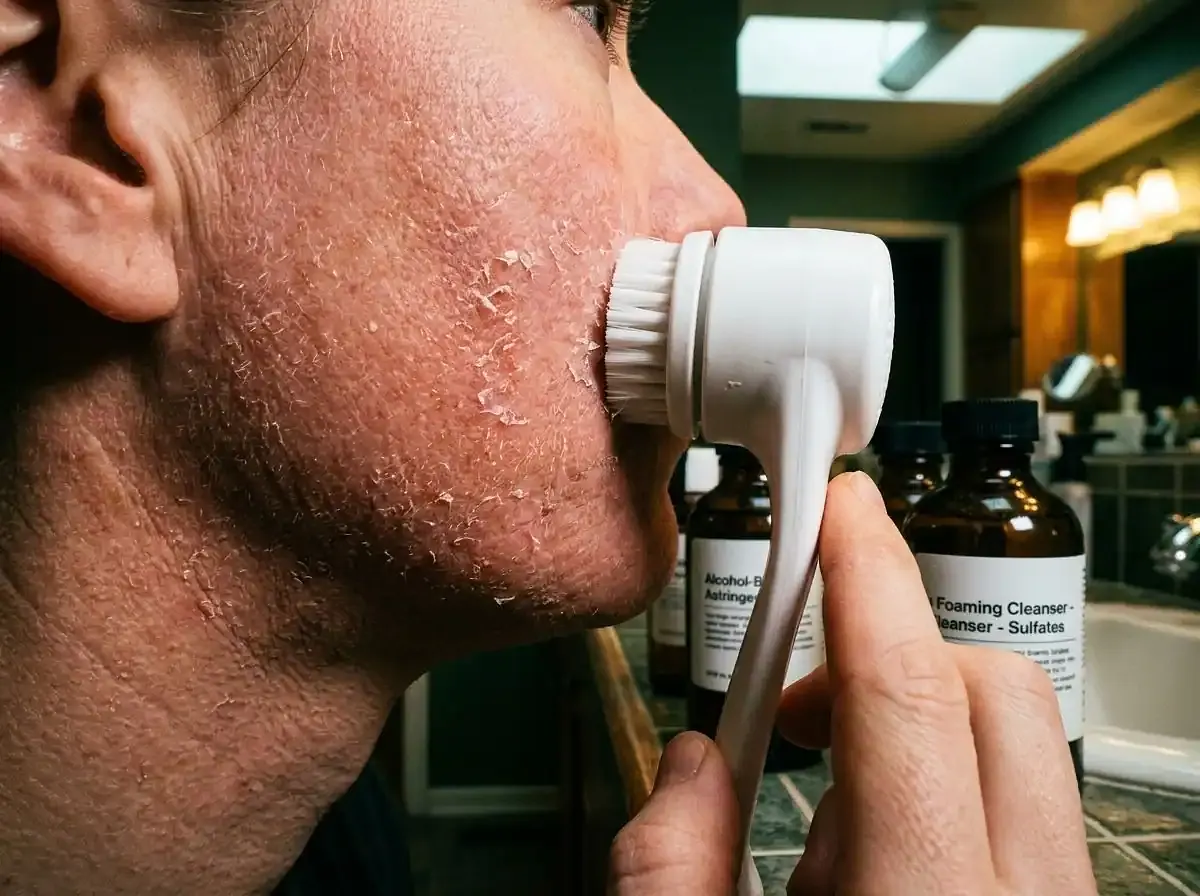
- Over-cleansing is the first and most common mistake. Washing your face more than twice a day strips the skin of its natural oils, which serve as the first line of defense against dryness. In fact, many skincare products on the market contain drying ingredients like alcohol and sulfur that do more harm than good.
- Forgetting to apply sunscreen is another mistake with long-term consequences. UV rays destroy collagen and progressively weaken the skin barrier, leading to increasing dryness over time. Likewise, expecting quick results and using strong products without gradually building up to them irritates the skin and traps it in a never-ending cycle of dryness and flaking. Patience and consistency are the secrets to any successful routine—not strength or intensity.
Understanding the causes of facial peeling and dry skin transforms a frustrating cosmetic issue into a solvable one. The path forward is almost always simpler than people expect — remove the triggers, repair the barrier, be consistent, and resist the urge to overcomplicate. New Skin Clinics and its dedicated hair and skin care center team are available to guide you through the process with professional assessment and evidence-based treatment when self-care alone is not enough. Reach out today and let a qualified specialist put together a plan tailored specifically to your skin.
Sources and References:
Frequently asked
Can oily skin also experience facial peeling and dryness? +
Absolutely, and this surprises many people. Oily skin can develop peeling when aggressive products strong acids, high-percentage retinoids, or alcohol-heavy toners strip the barrier faster than it can regenerate. The skin may continue producing oil normally underneath while the surface layer is simultaneously dehydrated and peeling. The New Skin Clinics hair and skin care center team frequently sees this pattern in patients who assumed their oily skin needed harsh treatment.
How long does it take to see improvement after treating facial peeling? +
Mild cases caused by a product reaction or temporary environmental exposure typically show clear improvement within one to two weeks of removing the trigger and supporting the barrier with the right ingredients. Chronic cases rooted in skin conditions like eczema or seborrheic dermatitis can take four to eight weeks of consistent, correctly targeted treatment before significant improvement appears. Patience is not optional the skin barrier regenerates on its own cycle, and rushing the process with strong actives usually sets recovery back.
When should I see a dermatologist about facial peeling and dry skin? +
The causes of facial peeling and dry skin sometimes signal conditions that over-the-counter products cannot address. If peeling is accompanied by redness, scaling, intense itching, or small blisters, a dermatologist should evaluate the skin promptly. Similarly, if a simplified, gentle routine produces no improvement after three to four weeks, professional assessment is the logical next step rather than continuing to experiment independently.