Treatment of Alopecia in Women
Learn about the causes and types of alopecia, as well as the best treatment methods for hair loss in women, through accurate medical information provided by the Hair and Skin Care Center at New Skin Clinics.
17.11.2026
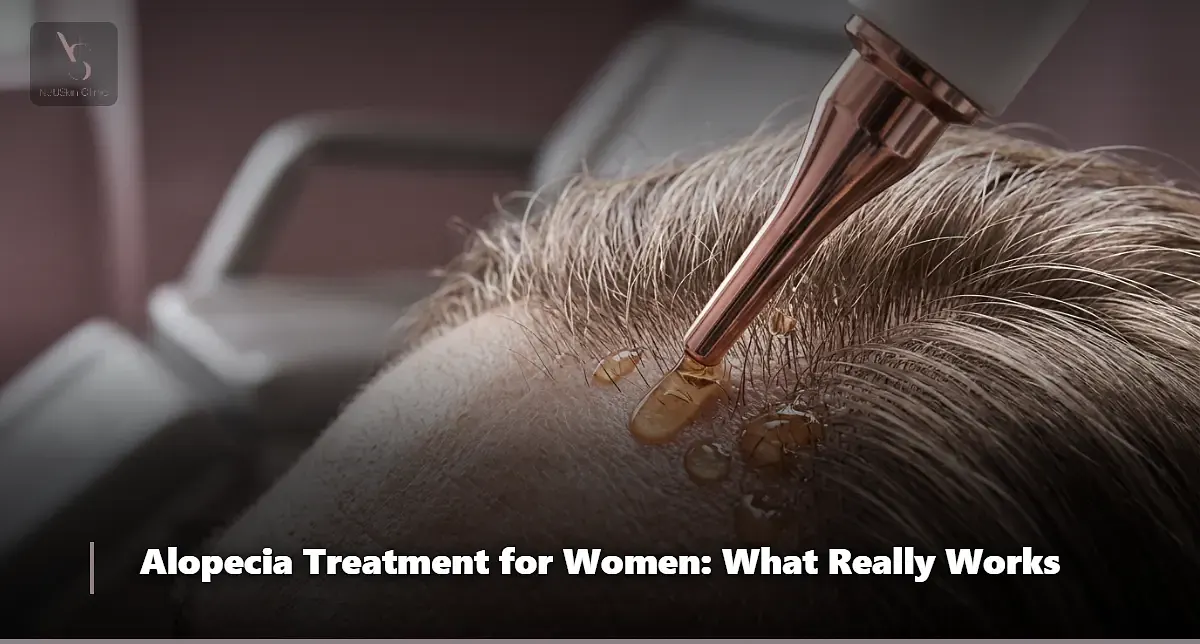
Noticing round, smooth patches where your hair used to be can be genuinely alarming — and for many women, it happens without any warning. Alopecia treatment for women is a topic that deserves far more honest, detailed conversation than it typically gets, because the condition is both more common and more treatable than most people assume. Understanding what's happening beneath your scalp is the first real step toward doing something about it.
At New Skin Clinics, the Hair and Skin Care Center team works with women at every stage of this condition from those who've just noticed a single small patch to those dealing with more widespread loss. The approach is never one-size-fits-all, because alopecia in women rarely is.
How Does Alopecia Appear in Women?
For most women, alopecia doesn't arrive with a dramatic announcement. It tends to start quietly a slightly wider part, a patch near the temple, or a section at the crown that feels thinner than it used to. The affected areas are usually round or oval, smooth to the touch, and completely bare. What's interesting here is that the skin itself looks entirely healthy. There's no scarring, no obvious irritation. The follicles are still alive; they've simply been signaled to stop producing hair.
The emotional impact tends to hit harder than people expect. Hair carries enormous social and personal meaning for women, and discovering patches even small ones can trigger anxiety that compounds the problem. Stress, as it happens, is both a trigger and a consequence of alopecia, which is why addressing the psychological dimension alongside the physical one matters so much.
The Difference Between Alopecia and Normal Hair Shedding
Everyone loses hair every day somewhere between 50 and 100 strands is considered completely normal. Alopecia is a different animal entirely. Normal shedding is diffuse, spread across the entire scalp, and the hair regrows in the same follicles on its own cycle. Alopecia, by contrast, is localized and abrupt. A patch appears where there was previously full coverage, and it doesn't fill back in without some form of intervention or immune system shift.
The texture of the remaining hair around the patch can also be a clue. Hair at the edges of an alopecia patch sometimes breaks off in a distinctive shape narrower at the base, wider at the tip which dermatologists sometimes call "exclamation mark hairs." If you're noticing that pattern, it's worth getting a professional opinion rather than waiting to see what happens.
Types of Alopecia That Affect Women
- Androgenetic Alopecia or Female Pattern Hair Loss
One of the most common causes of hair loss in women, it typically manifests as gradual thinning of the hair and widening of the part, especially at the top of the scalp.
- Alopecia Areata
A type of autoimmune disease, it often appears as circular or oval patches of hair loss and may also affect the eyebrows, eyelashes, or other areas of the body.
- Traction Alopecia
This is caused by repeated and continuous pulling on the hair, such as tight hairstyles, tight braids, and certain types of hair extensions. If the damage persists for a long time, hair loss may become permanent.
- Frontal Fibrosing Alopecia
A type of scarring alopecia, it often presents as a receding hairline at the front and may be accompanied by eyebrow loss. It is more common in older women and can lead to permanent hair loss if not treated early.
- Central Circulating Scarring Alopecia (CCCA)
A type of scarring alopecia that often begins in the center of the scalp and can lead to the destruction of hair follicles and the formation of scars, potentially resulting in permanent hair loss.
- Telogen Effluvium
This is a widespread form of hair loss that may occur after physical or psychological stress, after childbirth, or following certain health changes; it is usually temporary.
Learn about: Hair care basics
Symptoms of Alopecia in Women
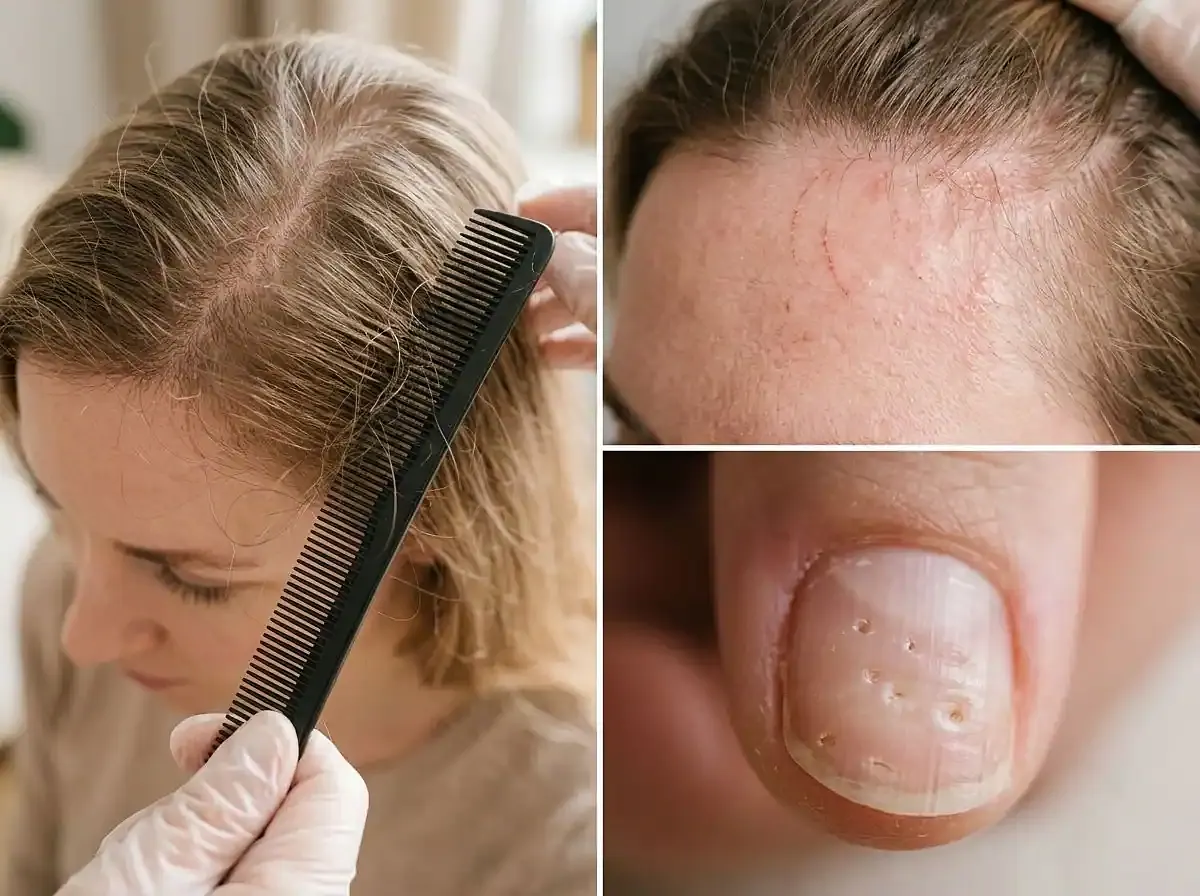
- The appearance of hairless patches on the scalp, which are often round or oval in alopecia areata.
- Gradual thinning of the hair and widening of the part, which is common in female-pattern hair loss.
- Receding hairline at the front, which may be accompanied by eyebrow hair loss in some types of alopecia, such as frontal fibrosing alopecia.
- Significant hair loss while showering or combing the hair.
- Areas of reduced hair density on the scalp or an increase in the visible areas of the scalp.
- loss of eyebrow or eyelash hair, especially in some types of autoimmune alopecia.
- Itching, redness, pain, or scaling of the scalp; these symptoms may occur in some types of inflammatory or scarring alopecia.
- Changes in the nails, such as small pits or roughness on the nail surface, which may accompany patchy alopecia in some people.
How Is Alopecia Diagnosed in Women?
Diagnosis starts with a clinical examination — a dermatologist or trichologist examining the pattern, distribution, and characteristics of the hair loss. In many cases, the visual presentation is distinctive enough to confirm alopecia areata without further testing. A dermoscopy examination, which uses a handheld magnifying device to look closely at the scalp and follicles, adds useful detail about follicle health and the presence of those diagnostic exclamation mark hairs.
Blood tests often follow, particularly to rule out overlapping conditions like thyroid dysfunction or iron deficiency anemia, both of which can cause or worsen hair loss. In less clear-cut presentations, a scalp biopsy may be recommended. The Hair and Skin Care Center at New Skin Clinics uses a combination of these diagnostic tools to build a complete picture before recommending any treatment pathway — because treating the wrong thing, or the right thing in the wrong way, wastes time that matters.
Alopecia Treatment for Women
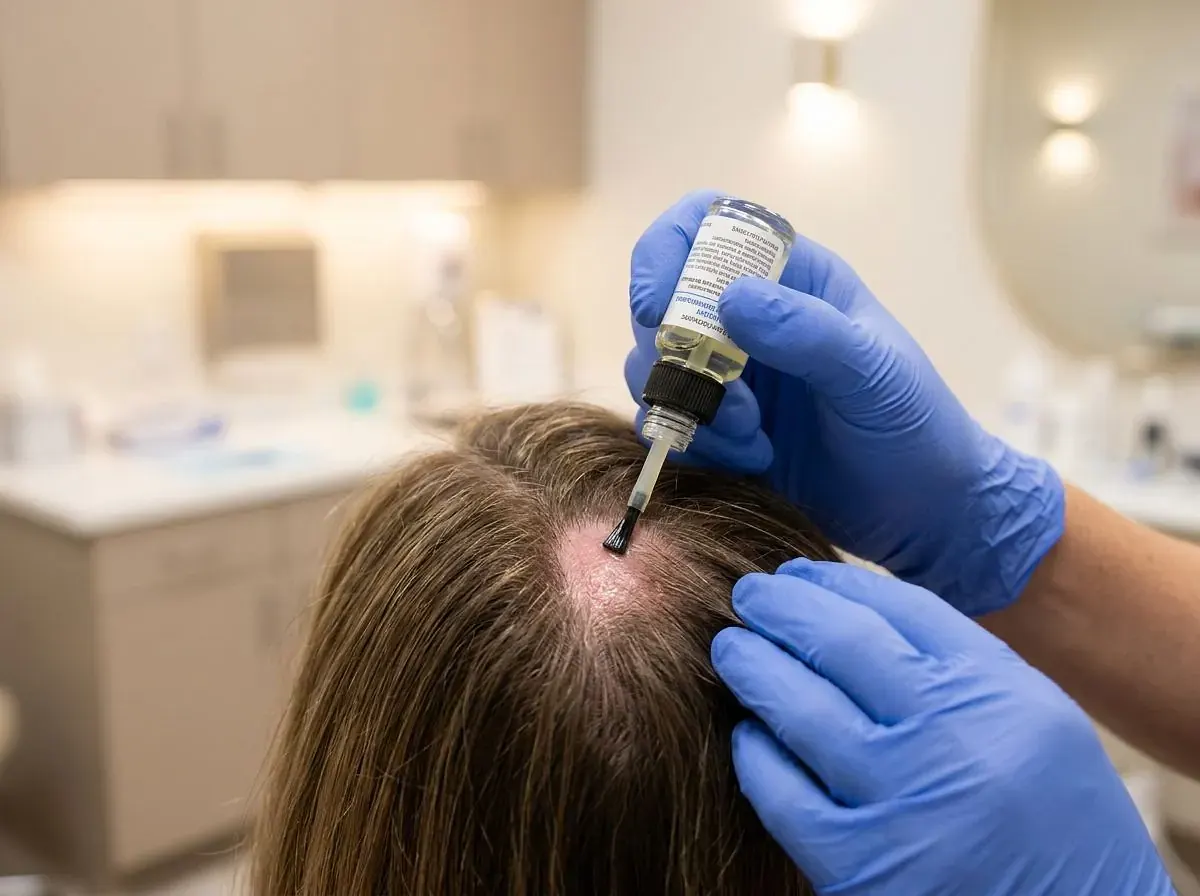
Alopecia treatment for women works along several different mechanisms depending on the type and severity of the condition. For autoimmune alopecia areata, the most established first-line options involve topical or injected corticosteroids, which work by suppressing the localized immune response that's attacking the follicles. Intralesional corticosteroid injections, delivered directly into the affected patches, are particularly effective for patchy hair loss and often produce visible regrowth within weeks.
Topical minoxidil is frequently used alongside immunosuppressive treatments to actively stimulate hair regrowth. It works by extending the growth phase of the hair cycle and improving blood flow to follicles it doesn't address the underlying autoimmune cause, but it can meaningfully accelerate visible results. Newer systemic options, including JAK inhibitors, have shown remarkable results in clinical trials for more extensive cases, representing a genuine shift in what's possible for women with significant alopecia. The Hair and Skin Care Center team stays current with these evolving options and can discuss eligibility during a consultation at New Skin Clinics.
Can Alopecia Be Permanently Cured?
Here's the thing — "permanent cure" isn't quite the right frame for understanding alopecia. For many women, especially those with mild to moderate patchy hair loss, the condition goes into remission on its own or with treatment, and the hair regrows fully. But alopecia is a chronic condition with a tendency to relapse, meaning a new patch can appear months or years later even after a successful treatment episode.
That said, sustained remission is absolutely achievable. Some women have a single episode and never experience another. Others manage the condition over time with periodic treatment. The goal of alopecia treatment for women isn't necessarily a one-time fix — it's building a relationship with a care team that knows your pattern and can respond quickly when needed.
Factors That Affect Treatment Outcomes
Duration matters significantly. Hair loss that's been present for less than a year generally responds better to treatment than long-standing patches where follicle activity has been dormant for longer. The extent of involvement also plays a role — patchy hair loss has a more favorable prognosis than total scalp loss, though even extensive cases can see improvement with newer therapies.
Underlying health factors like uncontrolled thyroid disease, nutritional deficiencies, or chronic high stress can blunt the effectiveness of any hair loss treatment. Addressing those contributing factors alongside direct scalp treatment consistently produces better outcomes than focusing on the scalp alone.
Mistakes to Avoid When Treating Alopecia
- One of the most common mistakes women make is trying every remedy they find online before seeing a specialist. Some of those remedies are harmless but ineffective; others — particularly harsh topical applications — can cause scalp inflammation that makes the underlying condition worse. Waiting too long is the other side of the same coin. Follicles don't wait indefinitely, and early intervention consistently outperforms delayed intervention.
- Another mistake is stopping treatment too early. Corticosteroid injections, for example, often require multiple sessions spaced weeks apart before full regrowth is visible. Stopping after one session because results haven't arrived yet is one of the most reliable ways to undermine a treatment plan that was actually working. A good specialist will set clear expectations upfront so you know what timeline you're working with.
How to Thicken Hair After Alopecia Treatment
Once regrowth begins, supporting it matters. Patchy hair loss often produces fine, lighter-colored hair initially this is normal and not a sign of failed treatment. The hair typically darkens and thickens over subsequent cycles. Scalp care during this phase should focus on gentle cleansing, avoiding excessive heat styling, and ensuring nutritional support through adequate protein, iron, zinc, and biotin intake.
Platelet-rich plasma (PRP) therapy is increasingly used at the Hair and Skin Care Center at New Skin Clinics as a complementary approach during the regrowth phase. By introducing concentrated growth factors directly into the scalp, PRP can accelerate the thickening and strengthening of newly regrowing hair, helping women get back to a full, healthy head of hair faster.
Alopecia is not a sentence. It's a manageable condition, and the landscape of alopecia treatment for women has genuinely improved in recent years — from better diagnostic tools to more targeted therapies. The key is early action, accurate diagnosis, and a care team that treats you as an individual rather than a textbook case. If you're noticing patches, thinning, or changes in your hairline that don't feel right, reach out to New Skin Clinics and speak with the Hair and Skin Care Center team. The conversation is the first step and it's one worth having sooner rather than later.
Sources and References:
Frequently asked
Is alopecia treatment for women different from treatment for men? +
In broad strokes, the treatment options overlap significantly corticosteroids, minoxidil, and JAK inhibitors are used across genders. However, some treatments require modification for women of childbearing age because of potential effects on hormonal balance or pregnancy. Minoxidil dosage, for example, is typically lower for women than for men. A specialist will tailor any plan to your specific hormonal profile and health history, which is exactly why self-treating based on information written for a general audience can lead you in the wrong direction.
Can stress alone cause alopecia in women? +
Stress can absolutely trigger alopecia areata in women who already carry a genetic predisposition to the condition. It does this by dysregulating immune function specifically, shifting the immune system toward the kind of inflammatory response that targets hair follicles. That said, stress rarely acts entirely alone. It's usually a trigger that activates a vulnerability that was already there. Managing alopecia treatment for women therefore often involves a parallel focus on stress reduction, sleep quality, and emotional support alongside the direct medical interventions.
How long does it take to see results from alopecia treatment? +
Most women begin to see early regrowth within six to twelve weeks of starting effective treatment, though this varies depending on the method used and the size of the affected areas. Corticosteroid injections tend to produce visible results faster than topical treatments. Full, cosmetically satisfying regrowth can take anywhere from three to twelve months. Patience is genuinely part of the process hair grows slowly, and the biological timeline can't be rushed, only supported.